It's time to drop the A from AI
It's just intelligence. And critically, it's yours.
A few days ago, my wife and I were sharpening some AI tooling for our small business. We streamlined our website and made it easier for agentic updates to improve our local SEO — a project that required a fair bit of coding and development work, ultimately completed by an AI agent, with my wife leading the charge from start to finish.
When everything was complete, I told her it was great work.
She replied, “I didn’t do it. Claude did.”
I immediately understood what she meant. But I also knew it wasn’t true.
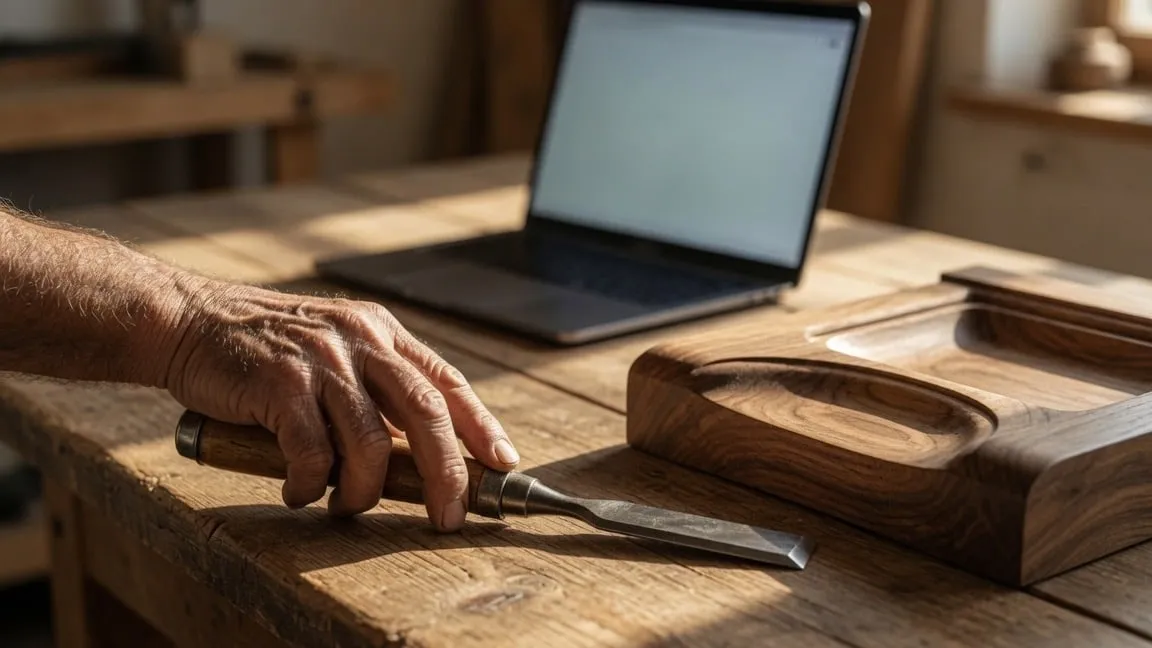
Imagine complimenting a carpenter on a beautiful piece of furniture and hearing:
“I didn’t do it. The hammer did.”
Absurd. Or, more absurd:
“My artificial hammer did it.”
The tool mattered. The hammer was useful. But nobody mistakes the hammer for the craftsman.
My wife identified the problem. She understood the business need, decided what success looked like, scoped the project, directed the work, reviewed the results, made corrections, and decided when it was finished. Claude just drove the nail.

She scoped it, directed it, reviewed it, and decided when it was done. Claude just typed.
That moment stuck with me, because I think it captures something many small business owners are struggling with right now. We’re treating AI as if it’s some external intelligence operating independently from us — something separate, something that deserves the credit while we stand off to the side and watch.
But that’s not what’s happening.
The AI wrote the code. Fine. But who decided what code needed to exist? Who understood the customer problem? Who knew which business process needed improvement? Who recognized when the output was wrong, and who determined when it was right? Who owns the outcome if it fails?
The answer isn’t Claude, ChatGPT, Gemini, or any other model. It’s you.
The intelligence was yours long before the AI arrived. What’s changing is that it can suddenly reach much further than it could before.
For most of history, capability was constrained by specialized skills. If you wanted a custom website, you needed a developer. If you wanted automation, you needed a programmer. If you wanted custom software, you needed a team. Today, a business owner with a clear vision can execute projects that were previously outside their domain — not because they became a software engineer overnight, but because the cost of execution has collapsed.
This is where many people get stuck. They see AI generating code, writing copy, building spreadsheets, creating images, and analyzing data, and they conclude the AI is doing the valuable work.
I think the opposite is increasingly true. Labor is becoming abundant. Judgment is becoming scarce.
The valuable part isn’t writing 1,000 lines of code — it’s knowing which 1,000 lines should exist. It isn’t generating ten marketing ideas — it’s recognizing which one is worth pursuing. It isn’t producing information — it’s applying wisdom.
That’s the part the models don’t own. And it’s the part that still belongs to you.
The word “artificial” made sense when the technology was new and mysterious. It still makes sense for frontier labs, Wall Street analysts, and television pundits discussing the future. But for those of us running businesses every day, the label is becoming less useful — because in practice, these tools aren’t replacing our intelligence. They’re extending it. They’re amplifying it. They’re multiplying it.
The intelligence was always yours. The multiplier is new.
So drop the A. And more importantly, drop the imposter syndrome. Own the credit for the things you build with these tools. Own the systems you create. Own the solutions you discover. Own the outcomes you deliver.
Because when you stop viewing AI as a separate entity and start viewing it as an extension of your capability, something important changes. You stop asking permission to try things that used to be outside your expertise. You stop assuming someone else is more qualified. You stop limiting yourself to the boundaries of your current skill set.
You start building.
And when you build with confidence, your gains compound. The businesses that thrive over the next decade won’t necessarily be the ones with the best AI. They’ll be the ones whose owners learn to wield intelligence — human and machine — as a single force.
And that intelligence is still yours.