Friday Build Day — October 23, 2026
The October 23 Friday Build Day is postponed. Life got in the way. Read the progress and updates from the day.
Oct 23, 5:00 AM CT: Another Friday Build Day
Pinned opening post. Written by Greg himself.
It’s another Friday Build Day (I’ve got to come up with a better name for these). The last one was ambitious, but this one is in a different category. This will probably be the only post I create by my own pen. I’m just not going to have time for the rest between soldering, a parts run, and moving physical atoms while the machines move the electrons (as Elon would say). It started with a cup of coffee at 3:45am. It’s now 5am and I’m well into my first build.
Here’s what’s on the docket:
-
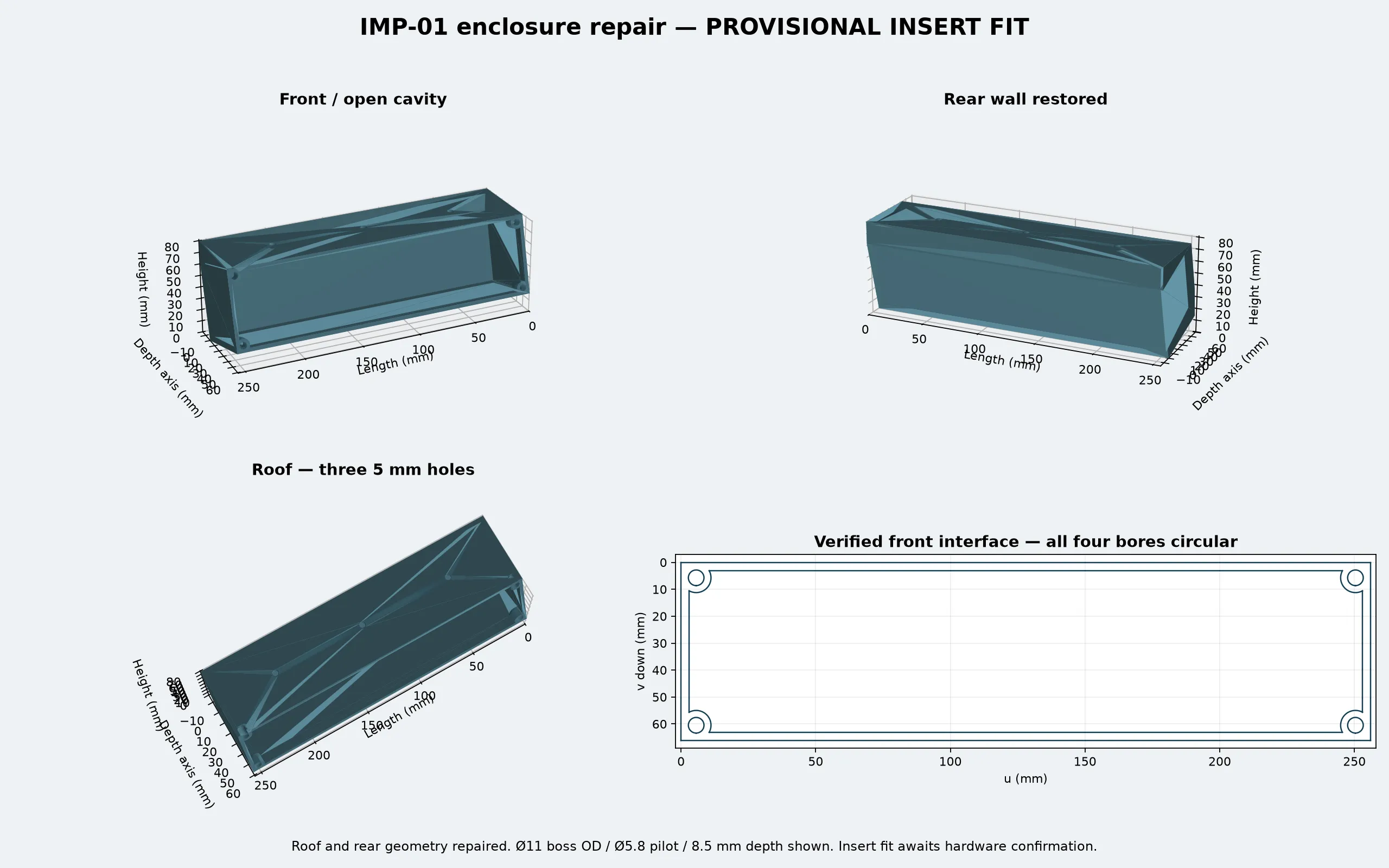
Workstation Control Panel: Nostalgia is on tap while I build a delightfully analog control interface to the workshop. I wanted a retro style control panel with lighted toggle switches, warm amber glow from a VU meter reminiscent of the old school audio amplifiers, knurled knobs with a hefty feel, and probably a lighting animation reminiscent of the knight rider car, “Kit.” The switches and knobs, although retro in form will do things like launch terminals on the desktop, open and close codex, fire automations, and control the Mac’s system volume among other things. I like this one because it brings old school tech to some very modern applications. It’s also going to force me to use AI assisted CAD drawing, which I’ve never tried before, instead drawing “by hand” so to speak in autocad fusion. To my amazement, Codex repaired an off-center inset boss that I hadn’t had time to fix yet myself before I could finish this post. Image below.
-
Church hymn boards: Previously, I built some hymn boards for my local church. They’ve been in service for a few months and functioning flawlessly. The music director has asked if I can add a little flair for an upcoming patriotic concert tied to America 250. How can I say no to that- God and country, what a calling. I’ll be adding dynamic backgrounds, and scrolling hymn lyrics triggered by some sort of wireless clicker. I may opt to build on an ESP32 board or see if there’s something available commercially with a 2.4ghz presentation clicker. There’s gotta be one somewhere.
-
Mechanical Drawing Inspector: This one comes to me from an engineer who I love dearly, my father. The idea is to see if we can use computer vision to search for, identify, and annotate engineering files for specific parts in an assembly. It’s a challenge right up my alley. I don’t expect to finish this one in a day though. The hours required for model training are just too long to fit in a day, let alone a day like today. But, I get to fire up the DGX Spark and any day I’m working in that workstation is usually a good one.
That’s enough to get us started. I have plenty of other projects in the hopper if I happen to be ahead of schedule.
Status snapshot
Last updated: Oct 23, 5:22 PM CT
Build Day is postponed. Life got in the way.
| # | Build | Assistant | Status |
|---|---|---|---|
| 1 | Workstation Control Panel | Codex | Postponed |
| 2 | Church hymn boards | TBD | Postponed |
| 3 | Mechanical Drawing Inspector | TBD | Postponed |
| 4 | Garage heater control | TBD | Postponed |
Control panel milestone: enclosure recreated from existing STEP files and validated in Bambu Studio.
Status key: Queued, Building, Blocked, Shipped, Postponed, Scrapped.
Updates
Newest first. All times CT.
Live updates, maintained by AI. Codex maintains this section from Greg’s updates throughout the day. The opening post stays pinned above the status snapshot.
Oct 23, 5:22 PM CT: Build Day is postponed
Build Day is postponed. Life got in the way.

Oct 23, 6:20 AM CT: From STEP files to slicer validation
From Greg:
Codex has recreated an existing enclosure design from STEP files I prepared for another project. No reason to start from scratch. It also (much to my surprise and delight) validated the resulting mesh in Bambu Studio using the slicer to examine the resulting print.
I’m beside myself. This means Codex can go from AI prompt to CAD design, to slicer validation, to starting the print with nothing from me but a prompt. I can whisper a design idea into a chat window, walk away, and a few hours later come back to a physical object sitting on the printer’s bed.
That in and of itself is astonishing.
Oct 23, 5:52 AM CT: A fourth build sneaks in: garage heater control
From Greg:
Another build sneaks in just after the starting gun. I intended to build this one a year ago but never got around to it. The winters here can be brutal so about 5 years ago I had a gas heater installed in my garage; controlled by a thermostat on the garage wall. Sometimes in the winter I’m outside shoveling snow walking the dogs, etc and the garage door is open. There’s no sense in heating the outside but walking over to the thermostat to turn it off never happens, nor does closing the door. I’m human.
The idea: use a relay to break the t-stat wire that calls for heat when the door is open. I already have a tilt sensor on the door. When the door is up, I’ll send a wireless signal to the NC relay to open the circuit. This will allow the heater’s board to shut down the burners gracefully and safely, just as if the t-stat had stopped calling for heat. When the door closes again, the relay closes, restores the heating call to the board, and the burner fires up.
The catch— I don’t want gas burners igniting and shutting off every time the door flies up and down. I’ll add delay logic directly to a microcontroller with a 5 min delay. When the tilt sensor sends the signal to break the circuit the microcontroller will wait 5 minutes to break the circuit, and then wait another 10 minutes to restore it after the door is closed. This keeps normal entry and exit out of the trigger, and gives the system time to recover properly.
By putting the timing logic on the same board that controls the relay, a failure in the timer (loss of power, or something else) also results in failure to open the control circuit. For now this seems like sufficient safeguards in my head. I’ll do some research.