Speed is the only thing that matters right now
I'm obsessed with speed — and right now, in business, I think it's the only thing that matters. Here's why, where it goes wrong, and the one idea that turns raw speed into progress: vector navigation.
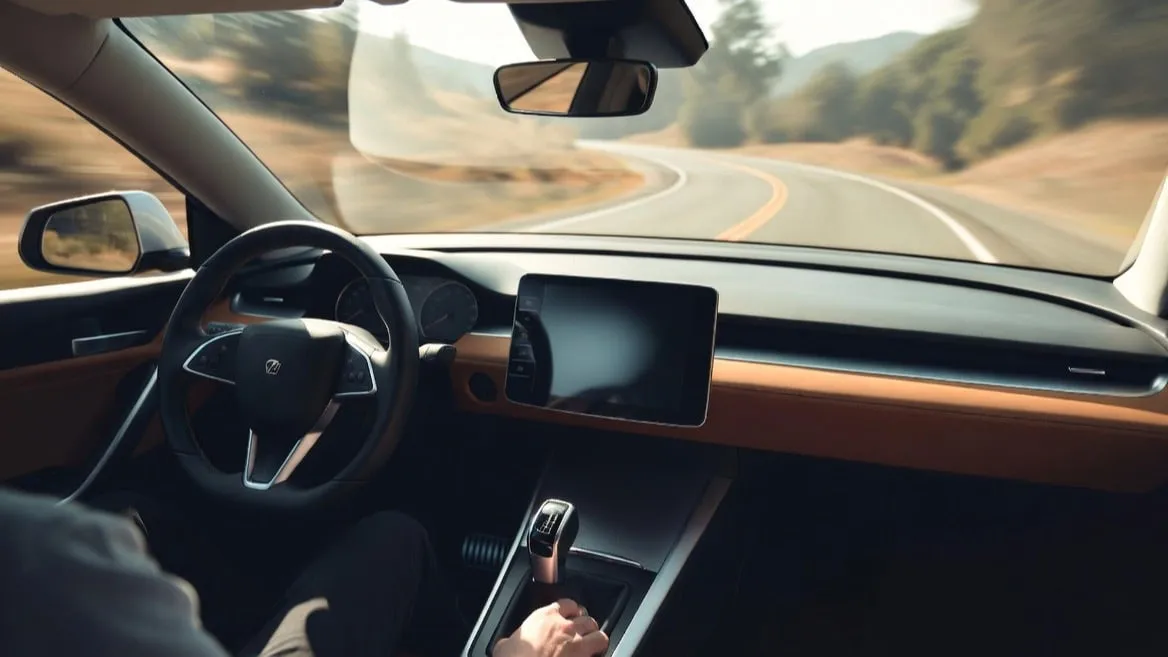
I’m obsessed with speed.
It reminds me of learning to drive. My dad was in the passenger seat while I worked the clutch, the shifter, the wheel, the pedals — totally in the zone, everything clicking. He let me run for a minute, then asked: “Do you know where you’re going?”
“No,” I said. “But we’re making great time.”
It’s a good joke because it’s exactly the wrong answer. And yet — right now, in business, I think speed really is the only thing that matters. Let me explain why, and where the joke stops being a joke.
Workstream engineering and the moving tipping point
Workstream engineering is a name I’m certain I didn’t coin — but I might be one of its loudest champions. When your workstreams are built right and tuned, they start to compound: you hit a critical mass where the system carries more than you put into it.

Velocity is what carries you up the hill. Ease off, and you slide back down.
The catch is the tipping point you have to clear first. I used to picture it as a flat walk up to a cliff — cross a line, fall into the good stuff. It isn’t. It’s an uphill climb to a peak. Velocity is what carries you up, and if you’re not moving fast enough, you slide back down.
Here’s the part that took me a while to see: you don’t slide because you lost ground. You slide because the competition gained it. Every time they move faster, your tipping point gets dragged to the top of a taller hill. Standing still isn’t neutral — it’s losing in slow motion.
The old world punished wasted motion
The old way of working ran on careful planning, for good reason. Labor was expensive and slow. If you scoped a workstream wrong — built the wrong thing, solved the wrong problem — you’d already burned weeks and real money by the time you found out. That’s wasted motion, and a small business can’t afford much of it. So you planned hard up front to avoid paying for mistakes later.
The new world doesn’t have wasted motion
New-world work runs on a different kind of labor — the kind I’m interested in: agentic, abundant, cheap, and above all fast. That changes the math completely.
If speed is the first thing, course-correction is a very close second. That’s not the same as not knowing where you’re going — it’s the opposite. It’s a vector: speed plus direction.
Because here’s what cheap, fast labor actually buys you: there’s no such thing as wasted motion anymore. If you start to veer off course, it costs almost nothing — in time or effort — to swing back. The penalty for being slightly wrong has collapsed, and the old insurance policy of heavy up-front planning no longer pays for itself the way it used to.
Two more things fall out of that. Planning horizons compress, because everything executes faster. And honestly? The world is changing so fast right now that a five-year vision borders on absurd. You’re not navigating to a fixed point on a map that’s holding still.
It’s a vector, not a destination
So it all points back to one idea: vector navigation. Speed, in a generally correct direction, with the monitoring in place to keep correcting as you go. Not a rigid plan. Not aimless flooring it. A heading and a fast engine.
That’s the difference between my dad’s question and the actual job. “Do you know where you’re going?” used to demand a precise destination. Now it just demands a direction — and a willingness to keep adjusting the wheel.
Cruise control and autopilot at the same time
When a workstream is built for this — fast by default, instrumented so you can see when you’re drifting — it feels like running cruise control and autopilot at once. Speed you don’t have to manufacture by hand, and correction that happens continuously instead of at some quarterly checkpoint.
That’s what gets you up the hill. Not a perfect map — velocity, pointed roughly right, correcting the whole way up.
We’re making great time. And now I know where we’re going.
And if you’re staring up that hill yourself — sizing up the leap, but wary of jumping without a net — that’s the work I do: building the speed, the heading, and the instruments to keep you on course the whole way up. You don’t have to make the climb blind. And you don’t have to make it alone.